How Long Will It Take Water to Boil Again After Adding Pasta
Pasta Hints and Tips – Pasta Etiquette
Read all of our helpful tips and learn how to melt perfect pasta every fourth dimension!
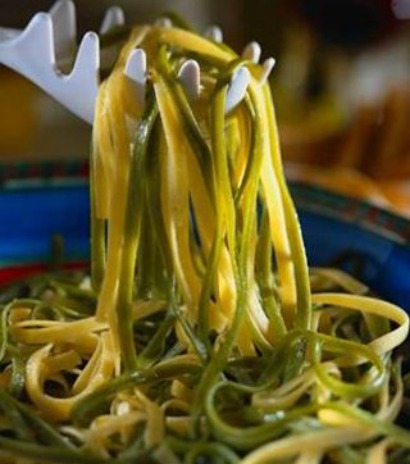
How To Buy Dried Pasta:
Read the label when buying dried pasta – The best pasta is fabricated of 100% semolina (the label will say durum – wheat semolina or semolia). Pasta made from durum wheat retain their shape and compactness while cooking. When cooked properly they do non go mushy or sticky. Pasta that are not made with semolina produce a softer noodle and will not agree up well when tossing. Utilise these pastas for casserole-style dishes.
Noodles are the only pasta products fabricated with egg solids which requite them a more intense color than other pasta.
Yous may substitute for another type of pasta in recipes; simply if you desire to use another type, remember that as a general dominion, it is best to substitute one pasta blazon with another of similar characteristics. It is important to match the shapes of pasta to the sauce. Apartment pastas are best with thin sauces; other shapes accept nooks and crannies to catch pieces of chunkier sauces.
Italian brands of pasta, in full general, are thicker than the American brands.
Check out Linda'southward delicious Pasta, Rice and Main Dish Recipes.
How To Measure Pasta – Pasta Equivalents:
Most dried pasta doubles in volume when cooked. For accuracy, measure pasta by weight rather than by cup. Cooked pasta can be measured by volume. The full general rule is one pound of dry pasta or freshly made pasta will serve half dozen equally an titbit or 4 as a main course. Recall – Shapes may vary in size co-ordinate to the manufacturer, and so employ these measurements as generalizations.
The easiest way to measure pasta is to employ your digital scale.
4 ounces of uncooked pasta (elbow macaroni, shells, rotini, cavatelli, wheels, penne, or ziti) = 1 cup stale pasta = 2 1/2 cups cooked pasta.
4 ounces of uncooked pasta (spaghetti, angel hair, vermicelli, fettuccine or linguine) = a 1-inch diameter bunch of dry pasta = 2 cups cooked pasta.
How To Cook Perfect Pasta:
Important Dominion: Pasta should exist prepared simply earlier serving information technology.
Utilise a Large Pot:
To cook perfect pasta you will need to use a lot of water. A too-small pot and too little water encourages the pasta to clump and stick together, thus cooking unevenly.
For a pound (16 ounces) of pasta, y'all volition want a pot that holds at least 5 or half-dozen quarts of water.
Use plenty of water and use only COLD or COOL Water:
Using plenty of water helps to preclude pasta from sticking together by rapidly washing away the exuded starch.
If your water contains any impurities, it volition taint the finished flavor of the pasta. Filter your home water if possible.
Make full that large pot 3/4 full of Common cold h2o or use at to the lowest degree one quart of cold water for every iv ounces of dry out pasta. 4 quarts is a bare minimum per 12-ounce package of pasta, six to 8 quarts is ideal.The reason for this is that hot water volition dissolve anything (including contaminants like atomic number 82) much more easily than common cold water and if that h2o encounters something like an older leaded pipe or some rust before coming out in your kitchen sink, information technology could very well end up in your glass. The near common trouble is water that has been sitting in your home pipes for over 6 hours.
Bring the pot of common cold water to a fast boil:
Covering the pot of cold h2o with a hat will assistance bring the h2o to a boil faster.
Add Salt:
Salting the water makes pasta taste meliorate past bringing out the natural flavor of the pasta. This does not increase the sodium level of your recipes.Annotation: I ever use kosher (coarse) salt.
Do not add your common salt until the h2o has come to a total boil. There are two reasons for this:
ane. First, unsalted water has a lower boiling point than salted water, so it will come to a boil a few seconds faster.
2. Second and more important, table salt dissolves faster in hot water. Un-dissolved salt crystals in cold water can mar the surface of your stainless-steel pots with minor white dots or pits.
Add plenty of table salt, about 2 tablespoons of kosher (coarse) salt per pound of pasta. This may seem like a lot, but it is necessary for getting the pasta properly seasoned. Plus, almost of the salt drains off with the h2o. If you lot taste the salted water, it should resemble "sea h2o."NOTE: If you are on a sodium restricted nutrition, please follow your doctor's orders earlier calculation salt.
Do NOT add oil of any kind. Oil has the unwanted effect of blanket the pasta and making it slick and then the sauce will not stick to it.
Adding the stale pasta:
Add the pasta, all at once, to the boiling salted water, and keep the heat high to bring the h2o back to the boil every bit apace every bit possible.Note: Never mix pasta types in one pot.
Explanation or Science of Boiling Water: Pasta added to water before information technology starts to eddy gets a heat commencement on mushiness. Pasta quickly begins to pause downwardly in tepid water as the starch dissolves. You demand the intense oestrus of humid water to "fix" the outside of the pasta, which prevents the pasta from sticking together. That is why the fast boil is so important; the water temperature drops when you add the pasta, but if you lot take a fast boil, the water will still be hot enough for the pasta to cook properly.
Stir at the beginning – After you add the pasta to the boiling water, stir with a long wooden spoon (stirring prevents pasta from sticking to each other and from sticking to the bottom and the edge of pan). Frequent stirring with a long wooden spoon or fork while the pasta is cooking will help the pasta to melt
Melt the pasta, uncovered, at a fast boil.NOTE: Once you take added your pasta, do not cover the pot with a lid. You can regulate the oestrus then the pasta/water mixture does not foam upwards and over the pot sides. Lower information technology the tiniest fleck, and everything should be under control.
Cooking Fourth dimension:
Practice non rely on the package to give you the correct cooking time (this is merely a guideline). Start timing when the h2o returns to a boil. Most pastas cook in eight to 12 minutes.
Test dry pasta for doneness after about 4 minutes of cooking by tasting it. It is difficult to requite verbal cooking times since different shapes andthickness of pasta volition have less or more time to cook.
Watch the cooking process of the pasta carefully. Pasta tin overcook very quickly. Pasta should exist tender only still firm when you swallow information technology, what the Italians call "al dente." To be sure, seize with teeth into a slice of the pasta (take a piece of pasta from the pan, cutting off a tiny piece, and chew information technology in your mouth). REMEMBER – Pasta will go on to cook and soften fifty-fifty after information technology has been taken from the water.
Definition of "al dente" (ahl-DEN-tay): In Italian the phrase means "to the tooth" and is a term used to depict the correct degree of doneness when cooking pasta, risotto, and vegetables. The food should accept a slight resistance (chewy) when biting into it, but should not be soft, overdone, or have a hard center.
Fulvia Guyger'south Italian tip for stopping cooking time: Once pasta has reached the "al dente" phase, immediately turn off your gas oestrus or remove the pot from the heat if using electric estrus. Add approximately 1/2 to ane loving cup COLD water to the hot water with the pasta. This will immediately lower the temperature of the water and finish the cooking.
How to Melt Perfect Pasta For Broiled Dishes: Because the pasta is cooked twice (boiled beginning and and so combined with other ingredients and cooked in the oven), pasta in baked dishes should boil less fourth dimension than normal. Boil until merely flexible simply notwithstanding quite firm (usually near a 1/iii of the normal cooking fourth dimension). To test, cutting into a piece.
Drain immediately:
Drain immediately into a large colander standing in the sink, and and then option upward the colander with its contents and shake it well to remove excess water.
Practice NOT rinse unless the recipe says to do so. The starch that makes the pasta stick to itself besides helps the sauce stick to the pasta. If you lot are going to toss the pasta with the sauce immediately, sticking should not be a problem.
Important: Once your pasta is ready, turn off the heat and scoop out i loving cup of pasta cooking water and set bated. This reserved pasta water contains essential starch that can be used later on to adjust the consistency of your sauce, from thickening information technology to thinning information technology. This soupy looking water you used to throw downwards the drain is actually a miracle ingredient!
Never, Never Over Drain Pasta:
EXCEPTION: Except when saucing with sparse or brothy sauces such as fresh tomato or seafood, pasta needs to be moist to combine well. As presently as it is tuckered, remove it from the colander and place information technology either back in the cooking pan to keep warm to toss it with the sauce, or place information technology in a preheated serving dish or private preheated serving bowls. Once the pasta is in the pan or basin, use a fork and spoon and rapidly toss it with the sauce.
Exercise NOT Rinse Pasta:
EXCEPTION: Do rinse the wide pasta, such every bit lasagna noodles. If you don't, yous will have a difficult time separating the noodles without tearing them.
Besides rinse when making a cold pasta salad. The thin coat of starch on the pasta will be pasty when cold.
Do Not Drown Pasta:
Never over sauce pasta. Italians complain that Americans drown their pasta in likewise much sauce. The Italians way is to toss pasta with just plenty sauce to coat it without leaving a big puddle on the lesser of the plate.
Warming A Serving Bowl: Cascade some hot water into it and allow stand until prepare to use. Then pour out the water and dry the bowl. Warm plates by putting theminto a 250 degree F. oven for x to 15 minutes merely earlier serving.
Reheating Pasta: Microwave the pasta in the storage container on Loftier for ane to 3 minutes, tossing the pasta halfway through. The length of time in the microwave depends on how much pasta you have. You can too reheat the pasta by putting it in a colander and running very hot water over it. Be sure to drain the pasta well earlier putting on sauce.
Making Pasta Ahead: Cook the pasta as usual, being particularly conscientious to cook it only until al dente. Drain, rinse under common cold running waterto cease the cooking, and again drain thoroughly. Allow pasta cool completely, so toss with a couple of teaspoons of oil so it will not stick together. Pasta can be stored in a plastic pocketbook or in a covered bowl in the refrigerator for up to three days.
Pasta Etiquette:
The perfect method for eating spaghetti or other long stringy pasta is to twirl it effectually your fork. Use a spoon to help if needed. It is also acceptable to cut pasta with a knife and fork. You can go some leverage by turning the pasta while belongings the tines of your fork against the edge of your plate. Information technology is even correct to neatly cut the pasta if twirling is too hard.
What is undeniably bad manners is slurping in a mouthful of trailing pasta without benefit of twirl or knife. It is often loud, and it is never pretty.
If possible, serve warm pasta in warm, shallow bowls instead of on dinner plates. The sides of the bowl aids in turning pasta noodles on the fork.
During the 18th and 19th centuries, the ordinary people ate spaghetti with their mitt. When the fork was invented, pasta became food fit for royalty also, because they could at present eat it without a loss of dignity. The Italians say that a character of a homo can be determined past the manner he eats spaghetti.
Check out Restaurant and Dinner Party Manners and Etiquette:Dining Etiquette Guide.
Table manners play an of import part in making a favorable impression. They are visible signals of the state of our manners and therefore are essential to professional success. The point of etiquette rules is to make yous experience comfortable, non uncomfortable.
kenttherteplied65.blogspot.com
Source: https://whatscookingamerica.net/pasta_rice_main/pasta.htm
0 Response to "How Long Will It Take Water to Boil Again After Adding Pasta"
Post a Comment